The Jamawar Pashmina Shawl
Of all the embroidery traditions that have emerged from the Kashmir Valley over five centuries, Jamawar is the most ambitious. The word itself — derived from the Persian jama (garment) and var (yard) — describes a textile so densely worked it was once measured by the yard like cloth, not priced by the piece. To hold a Jamawar pashmina shawl is to hold months of a single artisan's life.
The Jamawar tradition reached its apex under Mughal patronage in the 17th century, when Emperor Akbar became so besotted with Kashmiri shawls that he ordered his court to adopt them as a mark of distinction. The finest Jamawar pieces were gifts between emperors and kings — their weight in thread, a language of political alliance. When the Maharaja of Kashmir presented a Jamawar shawl to Queen Victoria in 1887, it caused such sensation that the pattern was immediately absorbed into British textile culture, becoming the paisley motif that still adorns scarves and ties across the Western world today.
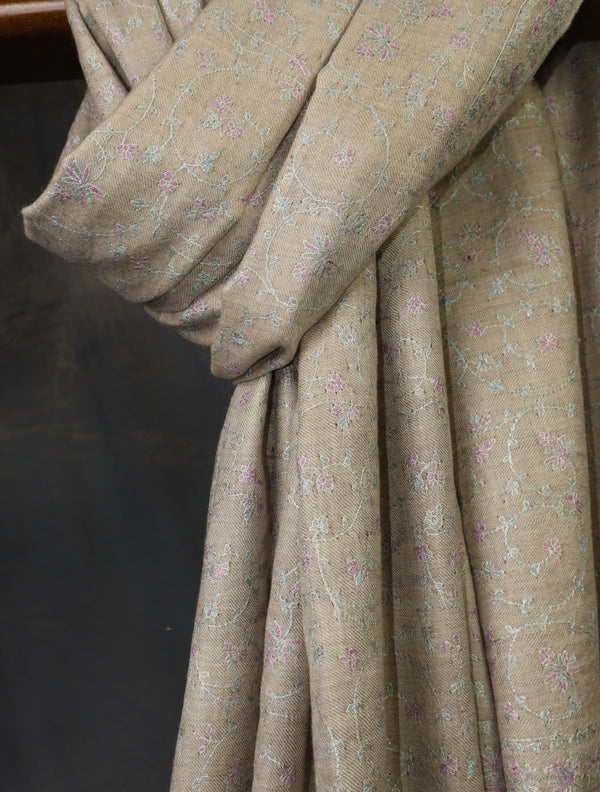
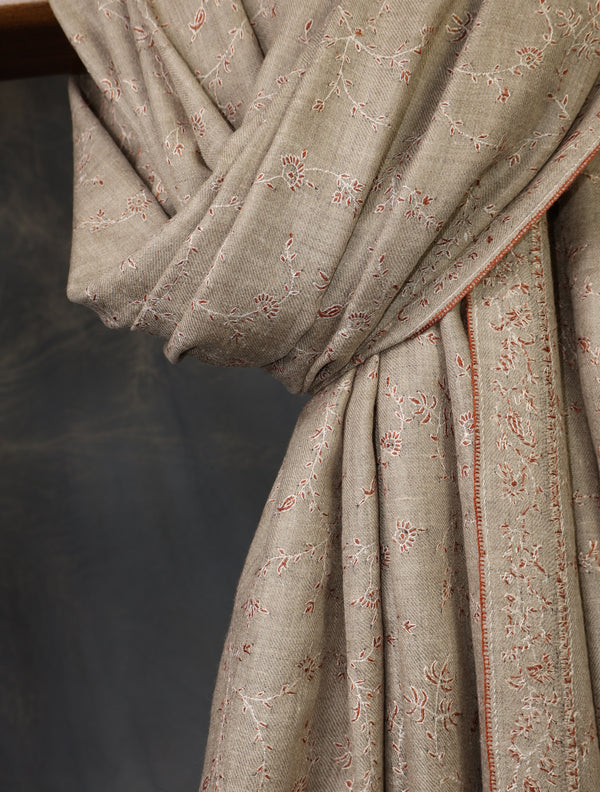
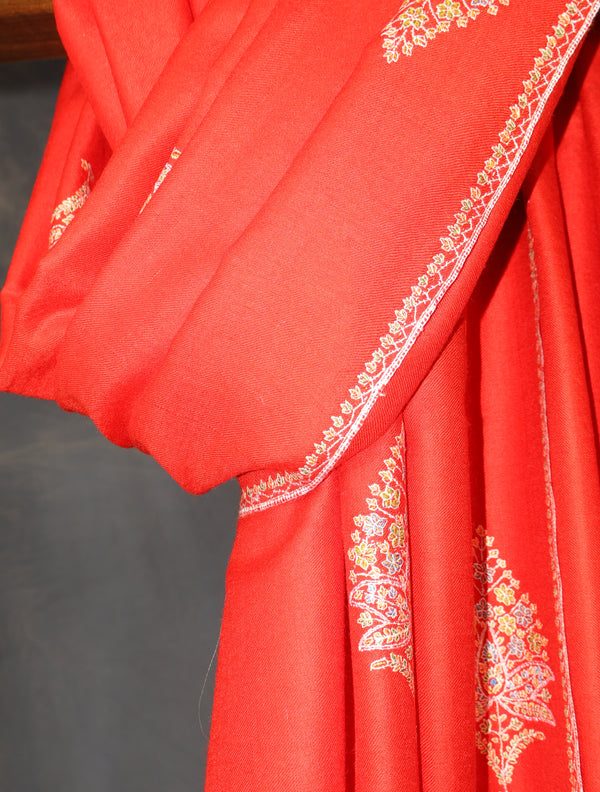
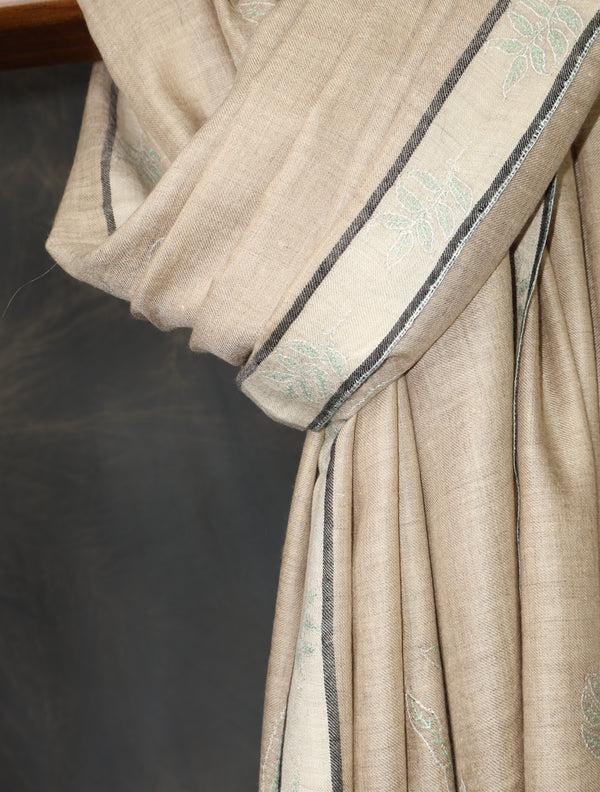
What distinguishes Jamawar from other embroidery is its density. Where border embroidery confines itself to the edges, Jamawar covers the entire surface — field, border, and pallu — in interlocking floral and paisley motifs so tightly stitched that in the finest pieces, the pattern is visible from both sides of the fabric. Master embroiderers in Srinagar train for years under a Wouste, learning first to draw the motifs freehand on the pashmina before placing a single thread, then to stitch with the consistency required to produce a shawl that is an absolute masterpiece.
Pure Kashmir's Jamawar collection is made entirely in Kashmir by families who have practised this craft for three and four generations. No two pieces are identical — each motif is stamped by a specialised artisan called Chapangur before embroidery begins, which means that two shawls embroidered from the same design will always differ in the small ways that are the signature of the hand.
Each Jamawar pashmina shawl ships with a certificate of authenticity. On the increasingly rare occasion that you encounter a genuine Jamawar shawl in a department store, it will cost three to five times as much. Here, it comes direct from the artisan's workshop in Srinagar, with nothing between you and the maker.